The Market Basket Trap: Buying for an Imagined Week
Plan market shopping around actual meals and adaptable ingredients to avoid a basket of good intentions that do not become satisfying suppers.
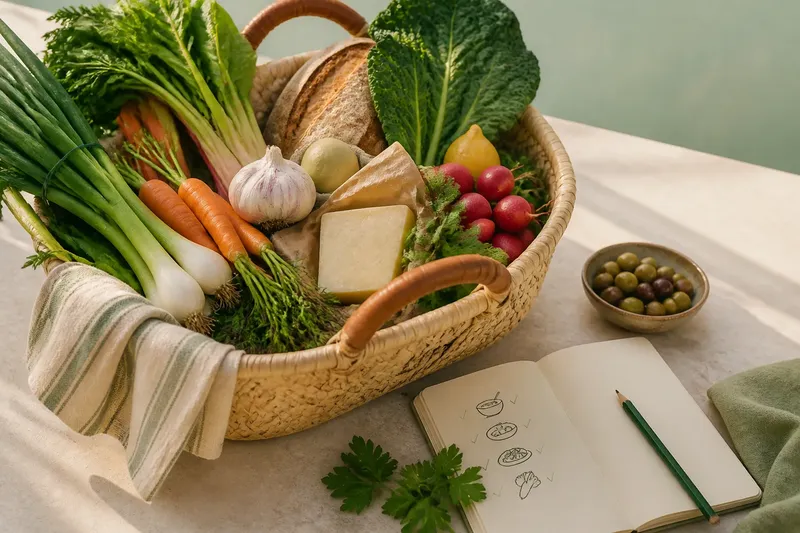
The common market-shopping mistake is buying for the week you hope to have rather than the meals you will actually make. A basket can fill with leafy greens, ripe fruit, a special cheese and ingredients for several ambitious dishes, then leave you with no clear supper when plans shift. Planning market purchases around actual meals helps turn attractive intentions into food you can use.
Why does a full basket still leave you without supper?
Often, the basket contains ingredients that look useful individually but have no shared role. A bunch of parsley, a bag of aubergines and a jar of olives might each suggest a dish, yet none answers the immediate question: what can be cooked with what is already at home?
Before shopping, name the meals that need covering. Include the nights you expect to cook, any meal likely to come from leftovers, and occasions when you may eat elsewhere. This is not a rigid menu; it is a check against buying several separate plans that compete for attention.
Say you expect to cook twice, eat with a neighbour once and rely on leftovers on another evening. If your cupboard already holds rice and tinned tomatoes, you might plan one rice-based meal and one tomato-based meal, then buy vegetables that can contribute to both. The result you are aiming for is a basket with clear jobs, not a promise to cook every day.
What causes ingredients to become unrelated intentions?
A recipe list can hide overlap. Each recipe may call for a different herb, vegetable or condiment, so copying every ingredient into a shopping list creates a string of small commitments. If one dish drops out, its distinctive ingredients may have nowhere else to go.
Look for shared ingredients before you leave. Choose a few that can move between meals: carrots might go into a soup and a salad, while spring onions could finish noodles or eggs. Keep the distinctive purchase only when you can name the dish and occasion it serves.
Another cause is shopping by mood alone. A market stall offers plenty of appealing choices, but “that looks good” is not a meal plan. Pause at the stall and connect each tempting item to a use: a side dish, a filling, a snack, or a planned replacement for something unavailable.
How can you plan for changing plans without buying too much?
Build a small amount of flexibility into the meals rather than buying extra ingredients for every possibility. A useful plan might have one meal with a firm shape and one that can absorb a change: soup can take different vegetables, while a tray of roast vegetables can be served with bread, grains or eggs already in the kitchen.
Make the adaptable ingredient do real work. A cabbage can become a slaw beside one meal and soften into a pan of noodles for another. A pot of yoghurt can serve as a sauce, breakfast or accompaniment. These ingredients are valuable because they fit more than one likely use, not because they are universally versatile.
Keep a short note of what is already at home, especially produce that needs using soon. A note on the phone or a glance at the fridge before leaving can prevent a second bunch of herbs or another bag of potatoes from arriving without a purpose.
What should you do when the market has different produce?
Decide which part of each meal is fixed and which part can change. If the plan is a vegetable tart, the pastry and basic method may be fixed while the filling depends on what looks good. If you planned a salad, keep its dressing and general character, then choose produce that suits it.
Ask the stallholder how an unfamiliar vegetable is commonly cooked, or choose a familiar substitute with a similar role. Do not buy a new ingredient merely because it is novel if you have no likely use for it. A market visit can still be curious without turning every discovery into a separate cooking assignment.
For produce that ripens quickly, consider when you expect to eat it. Buy the ready-to-eat item for the earlier meal and a firmer one for later, if the stall offers that choice. When storage or preparation depends on a label, producer advice or local rules, follow that guidance.
Which market-planning questions help before you pay?
How do I shop when I have no meal plan?
Choose a meal shape rather than a full recipe: soup, a pan of eggs, a grain bowl or a vegetable-and-bread supper. Then buy ingredients that fit that shape and check what is already in your cupboard before adding staples.
How can I avoid buying too many fresh herbs?
Decide which dish needs the herb and whether another planned meal can use it. If you cannot name a second use, buy the amount needed for the first dish or choose a herb already suited to another meal.
What should I buy first at a busy market?
Start with the ingredients tied to meals you have already chosen, then fill gaps with flexible produce. Leave open-ended browsing until you know what the basket still needs, so appealing extras do not displace the planned food.
How do I use an ingredient I bought on impulse?
Give it a place in a meal already on the plan, replacing a similar ingredient rather than adding another dish. If that does not work, set it aside for a simple use you can make soon and avoid buying more of it until that use is clear.
How do you check the basket before leaving?
Take a moment to match each item to a meal or a deliberate flexible role. Remove the items that only belong to a dish you are unlikely to cook, and check that you have the basic partner ingredients needed to make the planned meals complete.
- Meal: Can you name the meal this item supports?
- Overlap: Can it contribute to another planned meal?
- At home: Do you already have a suitable substitute?
- Timing: Is it likely to be used while it is at its best?
- Missing partner: Does the meal need an ingredient you have not bought?
The point is not to make every market trip predictable. Keep room for an unexpected bunch of greens or a particularly good loaf, but let that choice replace something rather than become another obligation. A market basket earns its place when its ingredients can meet the week as it is likely to unfold.