The Long Journey of the Sandwich
The long journey of the sandwich traces how bread, fillings and changing routines shaped a portable meal, while separating the Earl’s name from its origins.
The most common mistake in the long journey of the sandwich is to treat one aristocratic supper as its birth. That story may help explain the English name, but it is not evidence that a single person invented the broader practice of eating food with bread.
How did bread carry a meal?
Bread can be eaten alongside other food, folded around it or used to hold a filling. Those are related ways of eating, but they are not all the same dish, and surviving records do not identify one universal starting point for them.
For a history of the named sandwich, the evidence is clearer in one respect: the word became associated with John Montagu, the fourth Earl of Sandwich, in eighteenth-century England. The familiar tale says he asked for meat between bread so he could continue an activity without sitting down to a full meal. Treat it as an origin story for the name, not proof of the first bread-and-filling meal.
What does the Earl of Sandwich story explain?
The anecdote gives the dish a memorable name and a person around whom later accounts could gather. It does not establish that Montagu invented putting food between pieces of bread, and the story’s details are often repeated more confidently than the evidence warrants.
That distinction keeps the history in proportion. A name can make a familiar arrangement recognisable without making the arrangement new. The Earl is relevant to the sandwich’s English label; he cannot stand in for every earlier or unrelated way of eating bread with food.
How did work and travel shape portable meals?
Food that could be carried suited people eating away from a table, but portability alone does not show how or where a particular sandwich tradition began. Bread, fillings and local customs differed, so the same practical need could produce different forms.
Imagine a traveller setting out with a small loaf and cooked meat wrapped separately in cloth. They place the meat inside the split loaf before leaving; the result is easier to hold than the loose components, though juices may soften the bread. This invented scene illustrates a practical choice, not a documented historical episode.
Why did sliced bread become a familiar format?
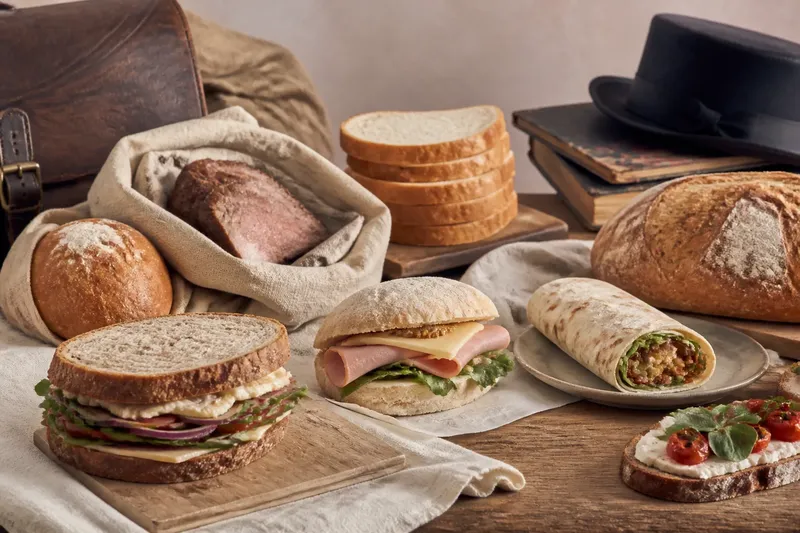
Sliced loaves made it straightforward to put a filling between two pieces of bread and serve a recognisable portion. But sandwiches also take the form of filled rolls, buns, folded flatbreads and open-faced slices; sliced bread is one format among several, not the definition of the whole history.
The bread and filling need to suit each other. A loose or wet filling calls for a sturdy base, while a soft spread can work with more delicate bread. For a packed meal, keeping wet ingredients away from the bread until serving can make the sandwich easier to handle.
How did shops and workplaces make sandwiches familiar?
Food sellers could prepare a sandwich for someone who wanted a meal to carry, while households could assemble one from available bread and leftovers. Cafés and other eating places also served sandwiches as part of a pause in the day. These settings helped make the named dish an everyday option, though the timing and spread varied by place.
The same construction suited different occasions: a filled roll could travel, while bread served with a filling at a table could be eaten at a slower pace. Work routines influenced what people wanted from a meal, but they did not produce one uniform sandwich culture.
What do readers ask about sandwich history?
What was the earliest sandwich?
No single first sandwich is established for the broad idea of bread eaten with a filling. The English name has a traceable association with the Earl of Sandwich, but that is a narrower claim than identifying the first such meal anywhere.
Did the Earl of Sandwich invent it?
The Earl is linked to the name and a popular anecdote, not proven to be the inventor of bread-and-filling meals. Keep the distinction between the history of a word and the history of a food practice.
When did sandwiches become everyday food?
Sandwiches became familiar through changing patterns of eating, selling food and spending time away from home. The process was gradual, and the available evidence does not support one universal date for that change.
Why do sandwiches differ between places?
Local breads, fillings and eating customs shape what people call and make a sandwich. A filled roll and a folded flatbread may answer a similar practical need while belonging to distinct food traditions.
How should you read the sandwich’s history?
Separate the story of the English name from the much broader ways people have eaten bread with other foods. The first has a familiar association with an eighteenth-century earl; the second is not reducible to one named inventor or a single documented origin.
For the long journey of the sandwich, pay attention to the terms an account uses: a claim about the name is not automatically a claim about the first meal. That small distinction makes the history easier to follow and less likely to flatten different food traditions into one origin story.