A Supper Built Around One Ripe Tomato
A supper built around one ripe tomato pairs its warm, juicy sweetness with crisp bread, cool dairy and a simple side for an easy late-summer meal.
The common mistake with a beautiful ripe tomato is to bury it in a crowded salad or turn it into a sauce before anyone has tasted it plainly. A supper built around one ripe tomato lets its warm, fragrant juice lead, and asks the rest of the plate to provide contrast rather than competition.
Imagine that you have one large tomato from a garden or market, a few people coming for an informal evening meal, and no wish to spend the evening cooking. The tomato is ripe enough to yield slightly at the stem end, so you plan to serve it in generous slices, with crisp bread, cool cheese and a bowl of something green. The point is not to make one tomato feed everyone by itself; it is to give it a clear, memorable place in a small supper.
What makes the tomato the centre of supper?
Its role comes from attention, not quantity. Set the sliced tomato on its own plate, season it shortly before eating, and leave enough open space around it for people to see the colour and reach for a piece without digging through other ingredients.
Choose a tomato that smells fresh and leafy near the stem and feels supple rather than soft or leaking. A single large beefsteak tomato may make broad slices; a heart-shaped or irregular one can be cut into wedges. If the available fruit is small, keep the same idea but serve it in thick halves or quarters, arranging them as the focus of a shared platter.
Do not refrigerate a ripe tomato just to make the meal feel more prepared. If it is already chilled, allow it to sit out until it no longer feels cold before slicing. Its aroma and texture are easier to appreciate when it is not served straight from the fridge.
One tomato can anchor a meal when every other element has a distinct supporting job.
How should the plate create contrast?
Start with three sensations the tomato does not supply on its own: crispness, richness and freshness. Toasted bread brings a firm edge for catching juice; a mild cheese offers a creamy, salty counterpoint; a plainly dressed leaf or cucumber salad gives the meal a cool, crisp pause.
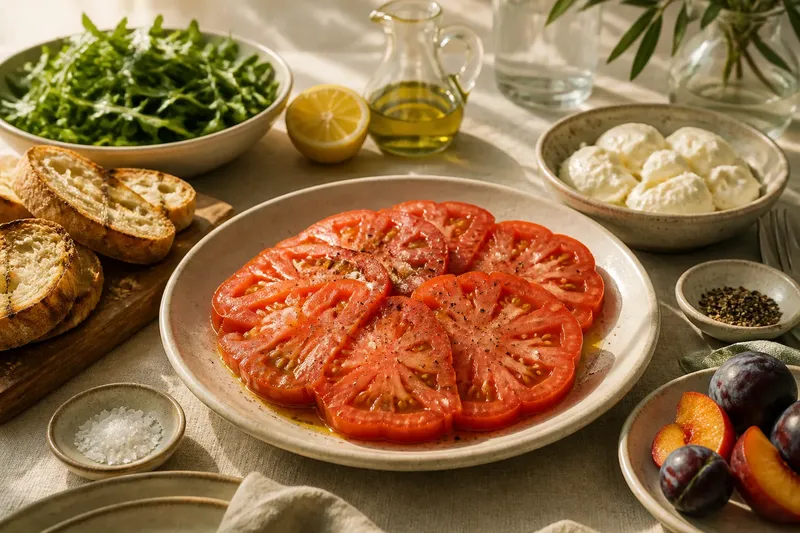
For this invented supper, the host chooses a rustic loaf, fresh mozzarella, a small bowl of rocket and a lemon. The mozzarella is torn into pieces rather than arranged over the tomato, so guests can choose a bite of cheese alongside a slice or keep the tomato unadorned. The rocket is dressed lightly with lemon juice, olive oil and salt, then served separately.
That separation matters. When bread, cheese and leaves are piled on top of the tomato, they hide its surface and soften in its juice. A shared table can still feel generous without making every ingredient part of one mixture.
Keep the seasoning spare. Flaky salt and a little olive oil may be enough; black pepper can be offered at the table. If the tomato is especially sweet, a small splash of red-wine vinegar or lemon can sharpen it, but add it only after tasting a slice.
What belongs on the table, and what can wait?
A simple supper becomes easier when the table is set around serving and eating rather than a long menu. For the imagined gathering, the host puts out:
- The ripe tomato, sliced just before guests sit down.
- Good bread, toasted or left fresh according to its texture.
- A mild, creamy cheese such as mozzarella, ricotta or a soft goat’s cheese.
- A small bowl of peppery leaves or sliced cucumber, dressed lightly.
- Olive oil, flaky salt and black pepper for the table.
- Fruit, such as peaches or plums, to offer after the savoury food.
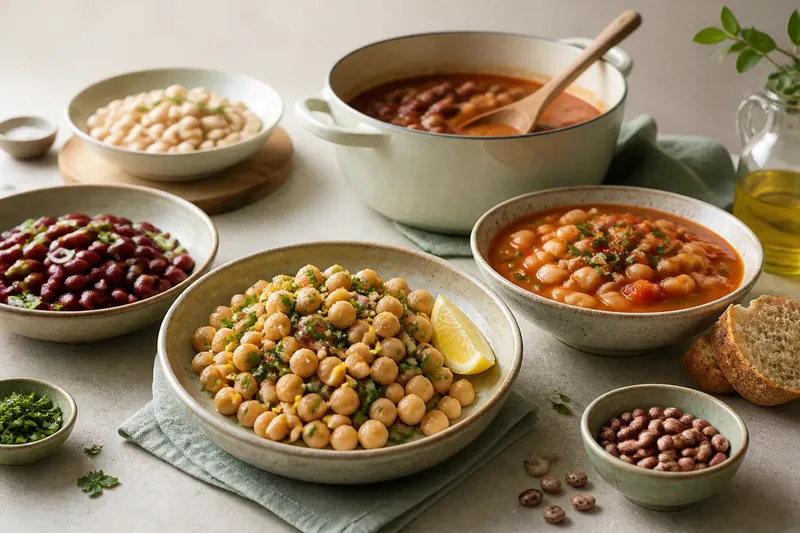
Each item has a reason to be there. The fruit extends the late-summer mood without requiring another cooked course, while the bread makes the meal substantial enough to feel like supper. If the group wants more food, add a bowl of lentils or white beans dressed with herbs and vinegar; keep it on the side so the tomato remains legible.
What can wait is anything that brings a second elaborate centrepiece: a complicated tart, several cooked vegetables or a large platter of cured meats. Those may be good foods, but they ask for attention the tomato is meant to receive. For this meal, restraint is a choice about emphasis, not a rule about what belongs at a table.
How can the host prepare without losing the moment?
Do the quiet work before the tomato is cut. Wash and dry the leaves, put the cheese in a serving dish, slice the bread and arrange the seasonings. Set out plates and a sharp table knife, then leave the tomato whole until the meal is nearly ready.
In the invented situation, the host notices that the bread is still soft inside and the crust has gone a little stale. Rather than discard it or make a separate dish, they toast thick slices in a dry pan while the guests arrive. The bread gains a crisp surface, and the host can serve it warm without adding another recipe or a complicated garnish.
Then the tomato is sliced across its width and placed on a shallow plate. A pinch of salt goes on just before serving, with olive oil in a small jug beside it. This order keeps the tomato from sitting in a pool of its own liquid while the rest of the table is being prepared.
If the tomato releases plenty of juice, do not pour it away. Let guests use bread to collect it, or spoon a little over the cheese. That small detail turns a by-product into part of the meal without requiring a new component.
What if the tomato or the table is different?
The same supper can flex around the fruit you have. A firm tomato benefits from thin slices and a little more resting time after salting; a very juicy one is better served in wedges on a plate with a slight rim. A strongly flavoured heirloom may need only salt and oil, while a milder supermarket tomato can take a sharper dressing.
Cheese is also adjustable. Choose ricotta for a soft, spoonable texture, feta for a saltier and firmer bite, or a dairy-free spread if that suits the guests. Keep the portion modest and serve it separately, so the tomato does not become merely a topping for cheese.
If someone avoids gluten, offer a suitable bread or crisp alternative and keep it apart from the shared loaf. For a larger appetite, add an uncomplicated side such as boiled potatoes with parsley or a bowl of chickpeas. The meal’s central idea survives as long as the additions do not crowd the tomato’s flavour and texture.
What questions come up when serving one tomato?
Can one tomato really be enough for supper?
It can be the centre of a shared supper, but it need not be the meal’s only substantial food. Bread, cheese and a side of beans, potatoes or leaves can make the table satisfying while leaving the tomato as the featured ingredient.
Should the tomato be served cold or at room temperature?
Room temperature is usually a good choice because a chilled tomato can seem less fragrant and firm. If it has been stored in the fridge, let it lose its chill before serving rather than warming it with heat.
What can replace mozzarella?
Use a mild cheese with a texture that contrasts with the tomato, such as ricotta or a soft goat’s cheese. Feta brings more salt and firmness, so serve it in a small dish and let people decide how much to add.
How can the host stop the bread from going soggy?
Serve the bread beside the tomato, not underneath it, and let each person add a slice when ready to eat. If the tomato has already released juice, spooning that juice onto bread at the table makes the softness intentional rather than accidental.
What does this supper teach about sharing food?
The invented meal reaches its result without turning the tomato into a project. Guests take a slice, add cheese or bread if they want, and return to the plate for the juice. The host has made one clear decision—let the fruit lead—and used small, familiar choices to make it feel like a complete gathering.
That approach suits an ingredient whose season is brief and whose best qualities are easy to obscure. A ripe tomato does not need a crowded recipe to earn its place at supper; it needs enough room for its aroma, texture and juice to be noticed. A supper built around one ripe tomato works best when the table gives every guest that same room to choose.